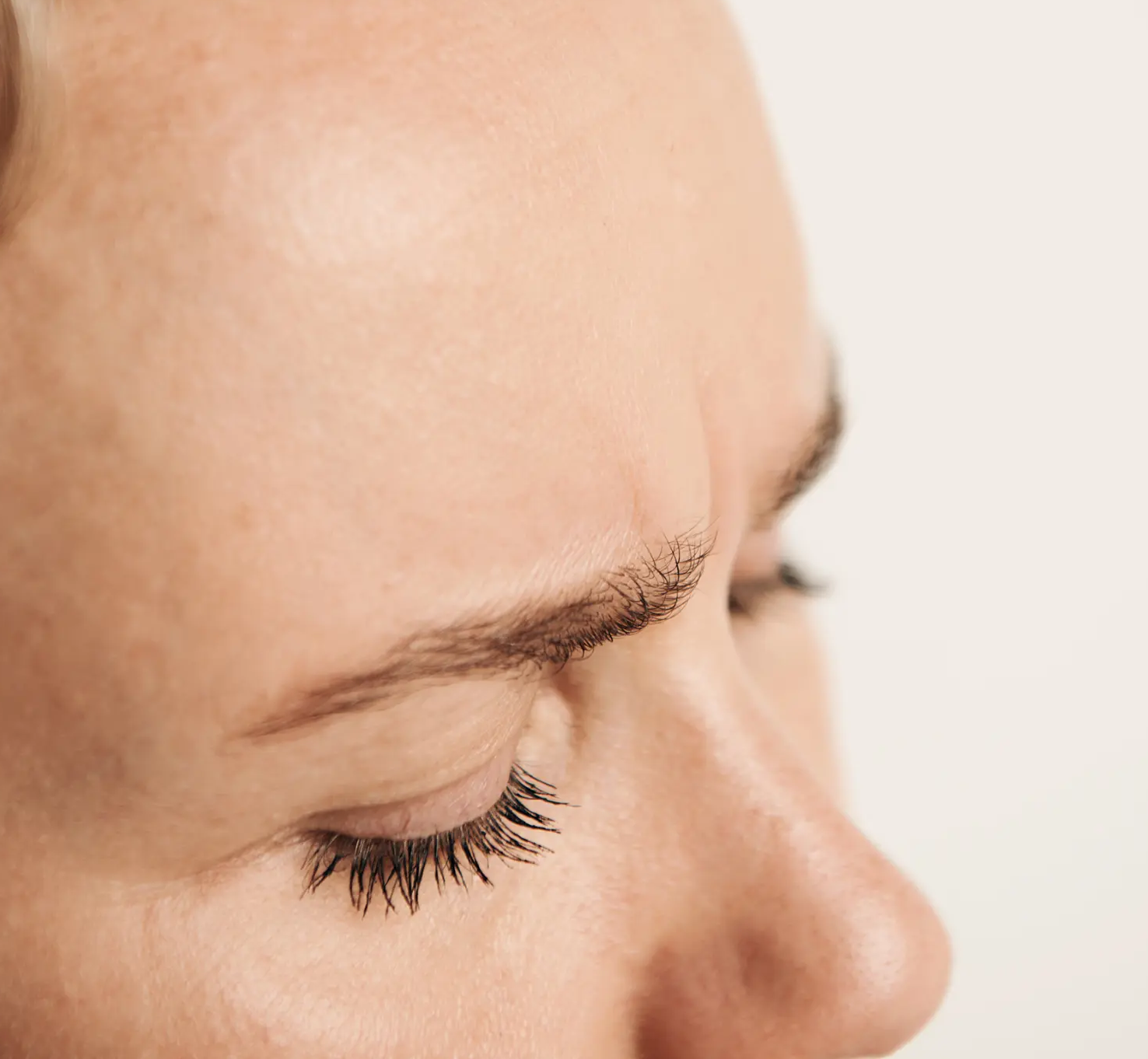
Upper eyelid surgery
Upper eyelid surgery: Careful assessment of eyelid skin, fat, support, and brow position before an individualized plan.
What is upper eyelid surgery?
Upper eyelid surgery treats selected tissues of the upper eyelid, particularly excess skin and eyelid contour. A heavy upper eyelid may also involve brow descent or a functional problem with lifting the eyelid. These issues should not be confused. The eyelids and brows are examined together so that the proposed operation addresses the relevant cause rather than only the visible fold of skin.
Blepharoplasty can address selected concerns involving upper or lower eyelid tissue. Assessment includes eye symptoms, brow position, eyelid support, and medical history because not every concern is best treated surgically.
Before your appointment, you can write down what troubles you most and when you notice it. Describe in your own words what you would like to change and what you would prefer to keep. A photograph may help explain a question without becoming a target. Consultation is a place to clarify wishes together, not a situation in which you must already know the right technique or decide on surgery immediately.
Bring practical questions into the discussion too. How much time can you arrange away from work? Who could help at home if needed? Are there trips, celebrations or particular work commitments planned for the coming months? Sharing these circumstances helps make the plan compatible with your life. Ask for clarification whenever something remains unclear, and ask how to reach your treating team before and after surgery. General website content is not a personal decision or treatment plan.
Before-and-after photographs show individual patient situations. When looking at them, consider what interests you and what you would like to ask during your own consultation. Another person’s photographs do not promise the same change for you. Say if the examples raise concerns or suggest a change that feels too extensive. Your own goal need not match a gallery example, and there is no need to rush a surgical decision. You can request the proposed plan in writing and return to your questions later.
Who is upper eyelid surgery suitable for?
Upper eyelid surgery may be considered when excess skin affects appearance or everyday function and examination supports a surgical plan. Dry eyes, previous eye surgery and eyelid closure are reviewed before a decision. The aim is not to remove as much skin as possible, but to choose a change compatible with the tissues and eye function. Perfect symmetry or a particular eye shape cannot be guaranteed.
- Adults concerned by selected upper- or lower-eyelid changes
- People without uncontrolled eye or general-health conditions
- Those who understand temporary swelling and visible bruising
- People with realistic expectations about symmetry and scars
How the operation is performed
The incision is usually planned within the upper-eyelid crease. Skin and, where appropriate, other tissues are treated according to the individual assessment. Local anaesthesia may be an option, but the choice depends on the procedure, any combinations and the patient’s circumstances. The duration is confirmed when the plan is established. Scar location, visibility with the eye open or closed and variations in healing are discussed in consultation.
- Review eye health, dryness, vision history, medicines, and previous procedures
- Assess eyelid support, skin, fat, brow position, and facial balance
- Discuss incision placement, temporary symptoms, and less common eye-related risks
- Plan photography and follow-up with privacy and consent in mind
Upper eyelid surgery recovery
Swelling and bruising may be visible after upper eyelid surgery even when you otherwise feel well. Screen-based work, physical work and public-facing work have different demands, so time off cannot be inferred from the procedure name alone. Tightness and eye symptoms can affect daily activities. The result is assessed as tissues settle; removal of stitches does not mean that all healing has finished.
- First days
- Swelling, bruising, watering, dryness, or tightness may occur. New visual symptoms need prompt advice.
- 1–2 weeks
- Bruising often improves, although appearance varies. Wound review follows the team's plan.
- 2–6 weeks
- Many activities resume gradually; residual swelling can persist.
- Several months
- Fine scars and eyelid tissues continue to mature.
Risks and possible complications
Particular attention is paid to dry eyes and eyelid closure. Removing too much skin can cause functional problems, which is why planning is measured. Scarring, asymmetry and a need for further correction remain possible. Sudden changes in vision or severe new eye pain require urgent assessment; in that situation, do not wait for a reply to an online message from the clinic.
- Bleeding, infection, scarring, asymmetry, and anaesthesia-related complications
- Dryness, watering, irritation, difficulty closing the eye, or eyelid-position change
- Temporary or persistent visual disturbance; sudden vision change requires urgent assessment
- An unsatisfactory result or need for further treatment
Price – what determines it
This page does not state a confirmed surgical price or assume that one fee applies to every situation. Ask Sairaala KL for an up-to-date written estimate based on your own plan. Check how consultation, the operation, anaesthesia, operating facilities and follow-up are itemised, and which are included in the quotation. This lets you compare the complete proposal without making assumptions about what a single figure covers.
Also ask about any separately charged investigations, supplies or additional appointments, together with payment and appointment-change terms. If a combination of procedures is proposed, request a clear description in the quotation. Do not infer your fee from another patient’s bill. Appointments and price enquiries are handled by the clinic on +358 20 766 9390; website information is not an individual quotation.
Frequently asked questions
Before and after photos
View surgical results here
Consultation
What to Expect from a Consultation
How the consultation works, how to prepare, and what we will go through together.
Book a consultation
A consultation explores your concerns, goals and options without committing you to surgery. Bring your questions and details of previous treatments. Appointments: Sairaala KL, +358 20 766 9390.
Eyelids